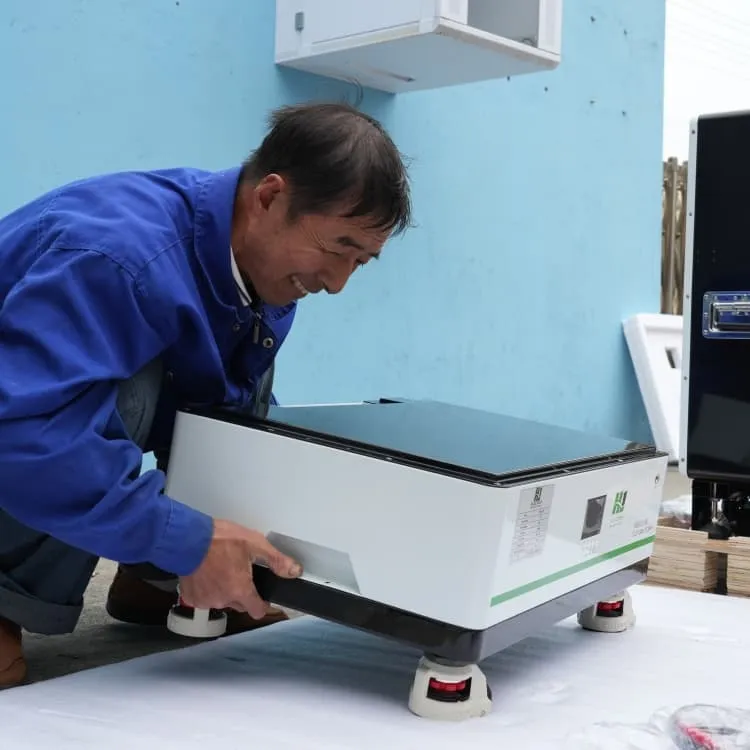
What is battery energy storage system (BESS)?
The scheme is designed to harness the potential of “renewable energy sources” such as solar and wind power. Prime Minister Narendra Modi-led Cabinet today has approved a scheme for viability gap funding for the development of Battery Energy Storage Systems (BESS) by approving budgetary support worth ₹3,760 crore.
Are battery energy storage systems worth the cost?
Battery Energy Storage Systems (BESS) are becoming essential in the shift towards renewable energy, providing solutions for grid stability, energy management, and power quality. However, understanding the costs associated with BESS is critical for anyone considering this technology, whether for a home, business, or utility scale.
What are base year costs for utility-scale battery energy storage systems?
Base year costs for utility-scale battery energy storage systems (BESSs) are based on a bottom-up cost model using the data and methodology for utility-scale BESS in (Ramasamy et al., ). The bottom-up BESS model accounts for major components, including the LIB pack, the inverter, and the balance of system (BOS) needed for the installation.
What is a battery storage system?
Battery storage, or battery energy storage systems (BESS), are devices that enable energy from renewables, like solar and wind, to be stored and then released when the power is needed most. Q1) What is Renewable energy? Renewable energy, often referred to as renewables, is energy derived from naturally occurring and replenishable sources.
Do battery storage technologies use financial assumptions?
The battery storage technologies do not calculate levelized cost of energy (LCOE) or levelized cost of storage (LCOS) and so do not use financial assumptions. Therefore, all parameters are the same for the research and development (R&D) and Markets & Policies Financials cases.
What is a 'levelised cost of storage' scheme?
The scheme is designed to harness the potential of “renewable energy sources” such as solar and wind power. "By offering VGF support, the scheme targets achieving a Levelised Cost of Storage (LCoS) ranging from ₹5.50-6.60 per kilowatt-hour (kWh), making stored renewable energy a viable option for managing peak power demand across the country.”
Press Release:Press Information Bureau
The Union Minister for Power and New & Renewable Energy has informed that the Union Cabinet, in its meeting held on 06.09., has approved the scheme for Viability Gap
Govt expands Battery Energy Storage scheme to 13,200 MWh
The Union Cabinet’s Viability Gap Funding (VGF) Scheme for Battery Energy Storage Systems (BESS) has been significantly expanded from 4,000 MWh to 13,200 MWh,
Cabinet approves ₹3,760 cr scheme to boost
Prime Minister Narendra Modi-led Cabinet today has approved a scheme for viability gap funding for the development of Battery Energy Storage Systems (BESS) by approving budgetary support worth ₹3,760
Cabinet approves Viability Gap Funding Scheme for battery
As we are also involved in advising clients in the renewable energy and cleantech commercial has been of corporate transactions involving entities engaged in the renewable regulatory
Utility-Scale Battery Storage | Electricity | | ATB | NREL
Base year costs for utility-scale battery energy storage systems (BESSs) are based on a bottom-up cost model using the data and methodology for utility-scale BESS in (Ramasamy et al., ).
Waaree Energies and 3 other stocks with up to
To enhance grid reliability and energy storage capacity, the government has introduced a Rs. 5,400 crore Viability Gap Funding (VGF) scheme for the development of 30 GWh of Battery Energy Storage
Cabinet approves scheme to reduce battery
This is expected to bring down the cost of battery storage systems increasing their viability. Designed to harness the potential of renewable energy sources such as solar and wind power, the scheme
BESS Costs Analysis: Understanding the True Costs of Battery
On average, installation costs can account for 10-20% of the total expense. Unlike traditional generators, BESS generally requires less maintenance, but it’s not maintenance
Cabinet approves the Scheme titled Viability Gap Funding for
By offering VGF support, the scheme targets achieving a Levelized Cost of Storage (LCoS) ranging from Rs. 5.50-6.60 per kilowatt-hour (kWh), making stored renewable
Battery Energy Storage Systems (BESS) Scheme
By offering VGF support, the scheme targets achieving a Levelized Cost of Storage (LCoS) ranging from Rs. 5.50-6.60 per kilowatt-hour (kWh), making stored renewable energy a viable option for
Press Release:Press Information Bureau
The Union Minister for Power and New & Renewable Energy has informed that the Union Cabinet, in its meeting held on 06.09., has approved the scheme for Viability Gap
Govt expands Battery Energy Storage scheme to 13,200 MWh amid falling costs
The Union Cabinet’s Viability Gap Funding (VGF) Scheme for Battery Energy Storage Systems (BESS) has been significantly expanded from 4,000 MWh to 13,200 MWh,
Cabinet approves ₹3,760 cr scheme to boost battery storage system
Prime Minister Narendra Modi-led Cabinet today has approved a scheme for viability gap funding for the development of Battery Energy Storage Systems (BESS) by
Waaree Energies and 3 other stocks with up to ₹31,000 Cr capex
To enhance grid reliability and energy storage capacity, the government has introduced a Rs. 5,400 crore Viability Gap Funding (VGF) scheme for the development of 30
Cabinet approves scheme to reduce battery storage cost
This is expected to bring down the cost of battery storage systems increasing their viability. Designed to harness the potential of renewable energy sources such as solar and
BESS Costs Analysis: Understanding the True Costs of Battery Energy
On average, installation costs can account for 10-20% of the total expense. Unlike traditional generators, BESS generally requires less maintenance, but it’s not maintenance
Battery Energy Storage Systems (BESS) Scheme
By offering VGF support, the scheme targets achieving a Levelized Cost of Storage (LCoS) ranging from Rs. 5.50-6.60 per kilowatt-hour (kWh), making stored renewable energy a
Press Release:Press Information Bureau
The Union Minister for Power and New & Renewable Energy has informed that the Union Cabinet, in its meeting held on 06.09., has approved the scheme for Viability Gap
Battery Energy Storage Systems (BESS) Scheme
By offering VGF support, the scheme targets achieving a Levelized Cost of Storage (LCoS) ranging from Rs. 5.50-6.60 per kilowatt-hour (kWh), making stored renewable energy a
Solar Energy Discussion
Share your thoughts on solar power and energy storage solutions.